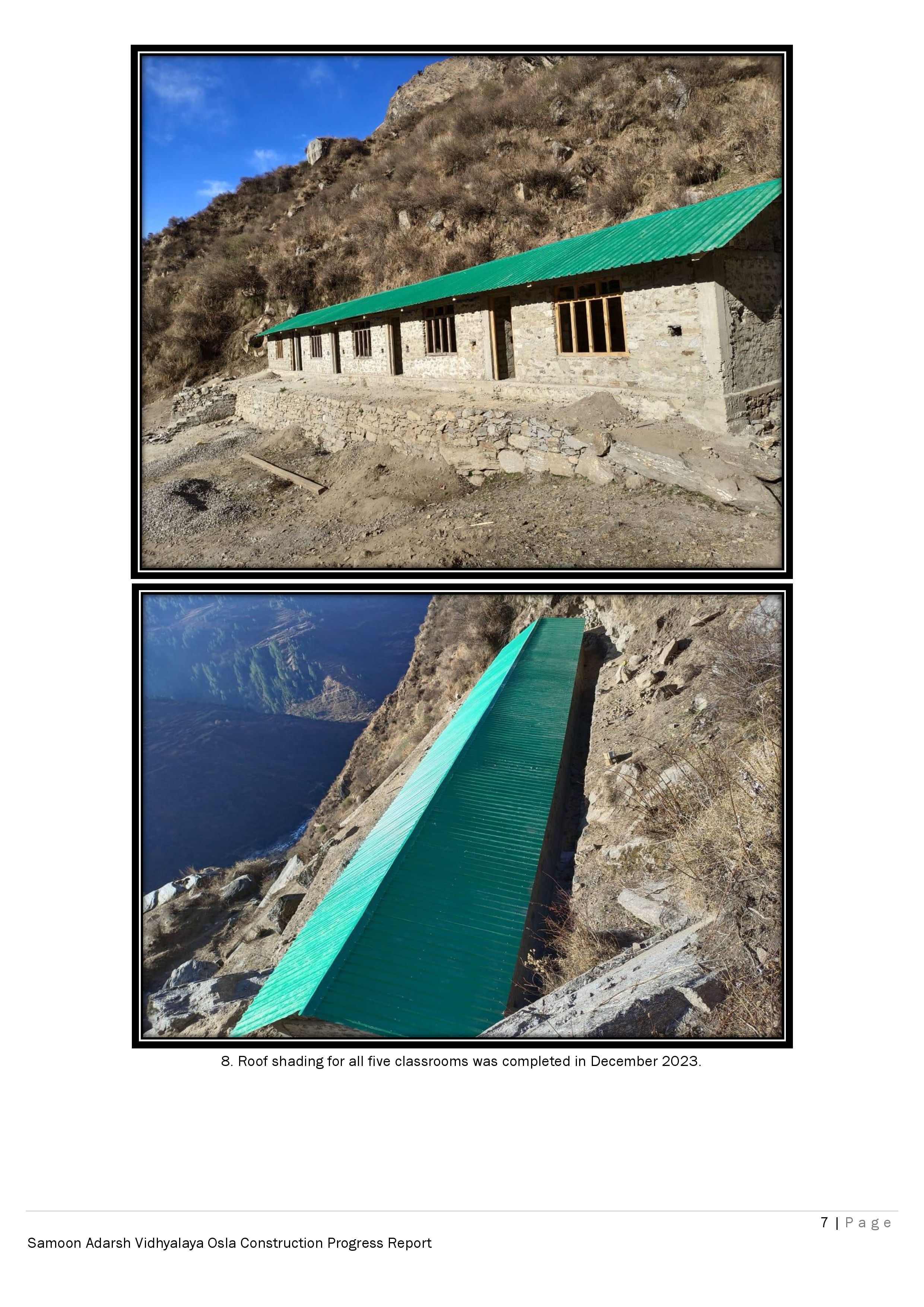
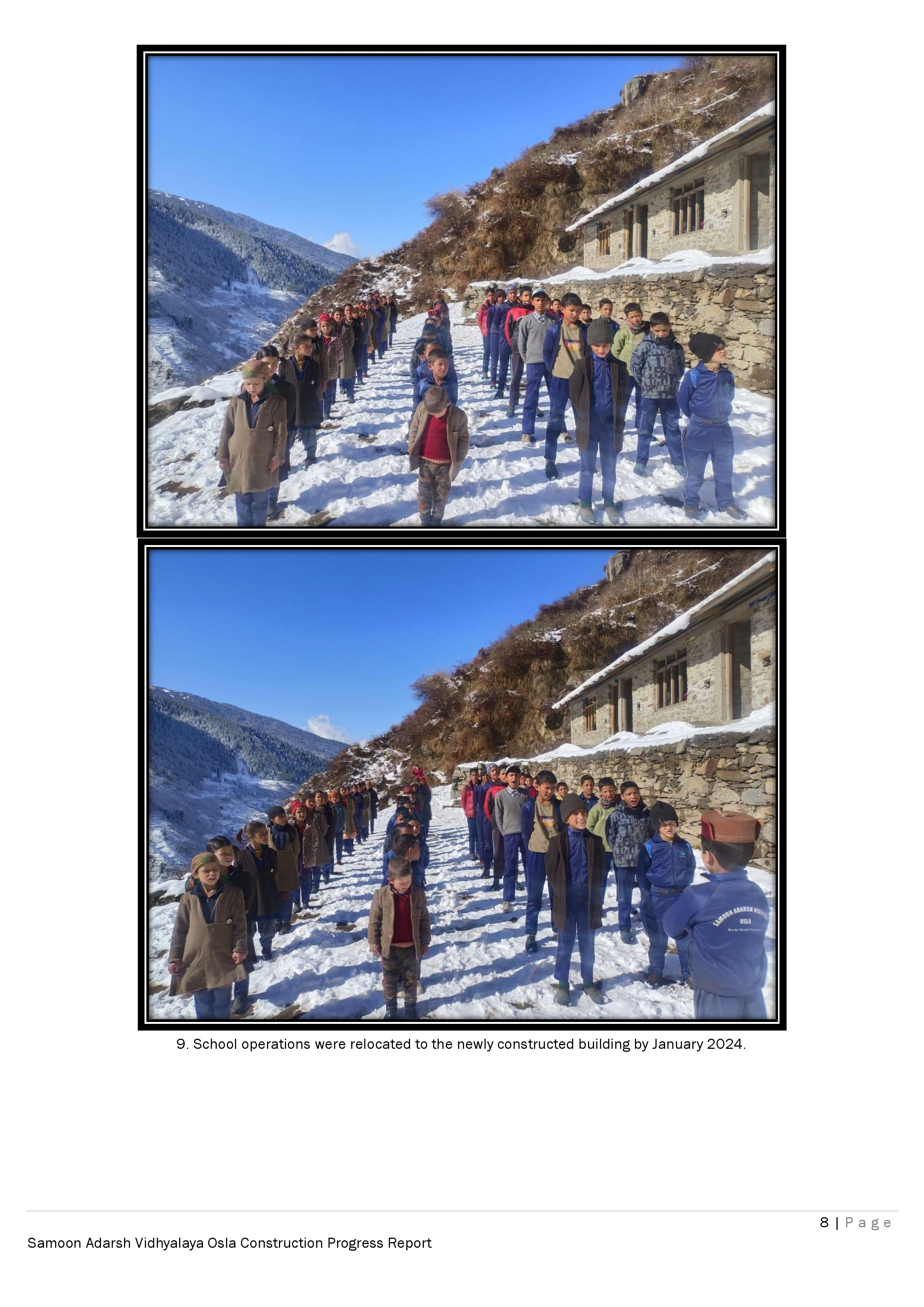
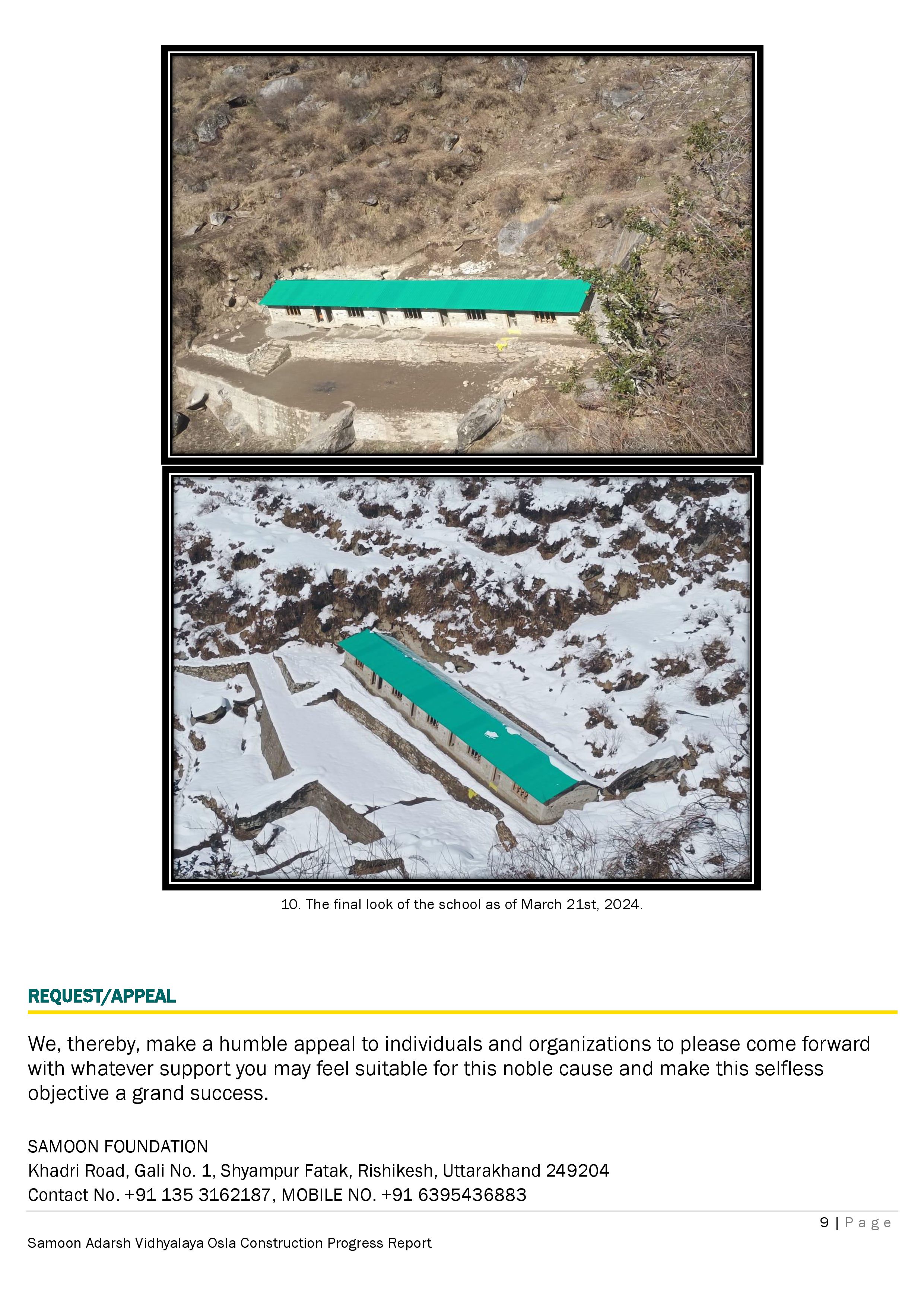
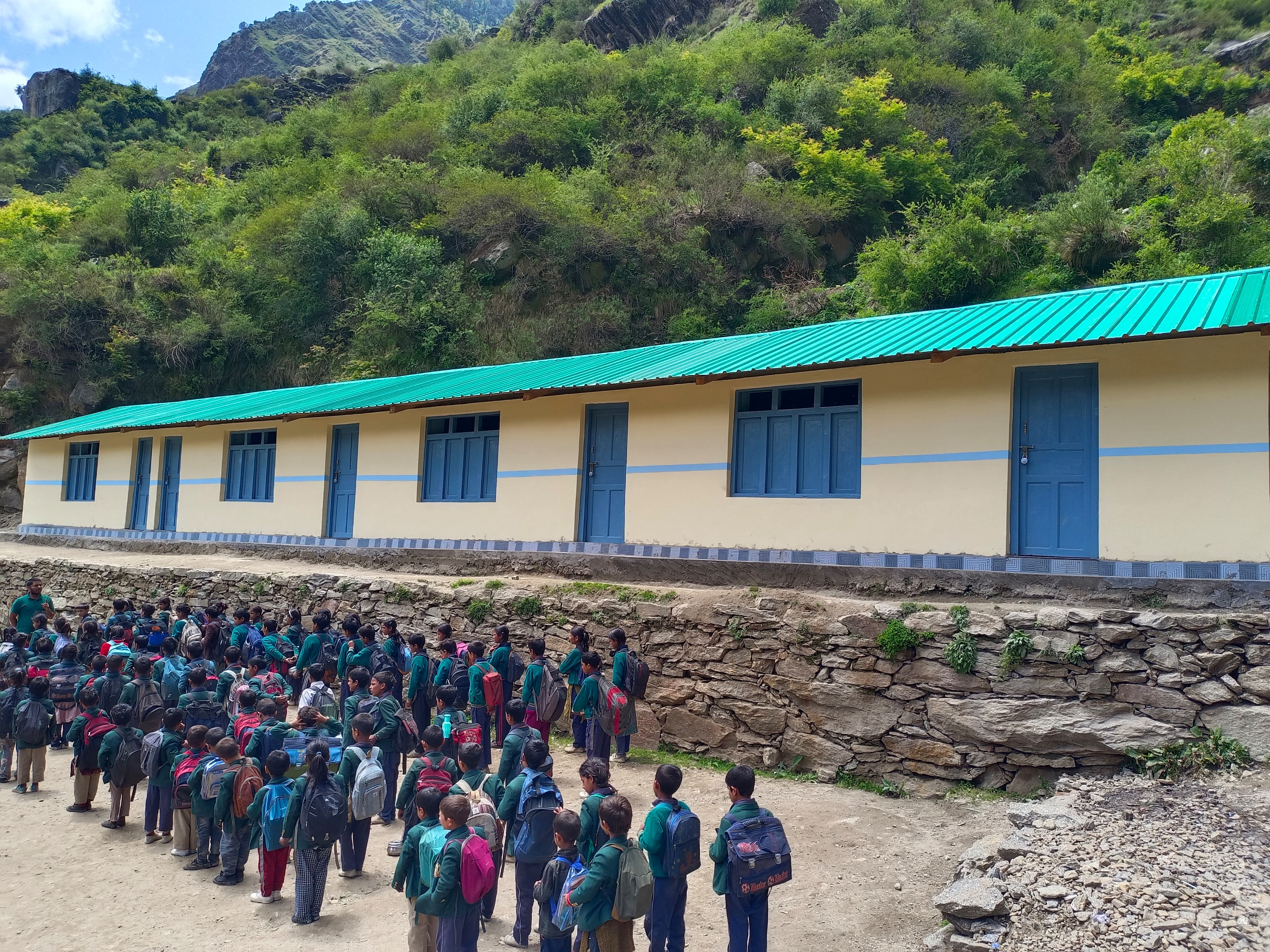
- Completed Project
-
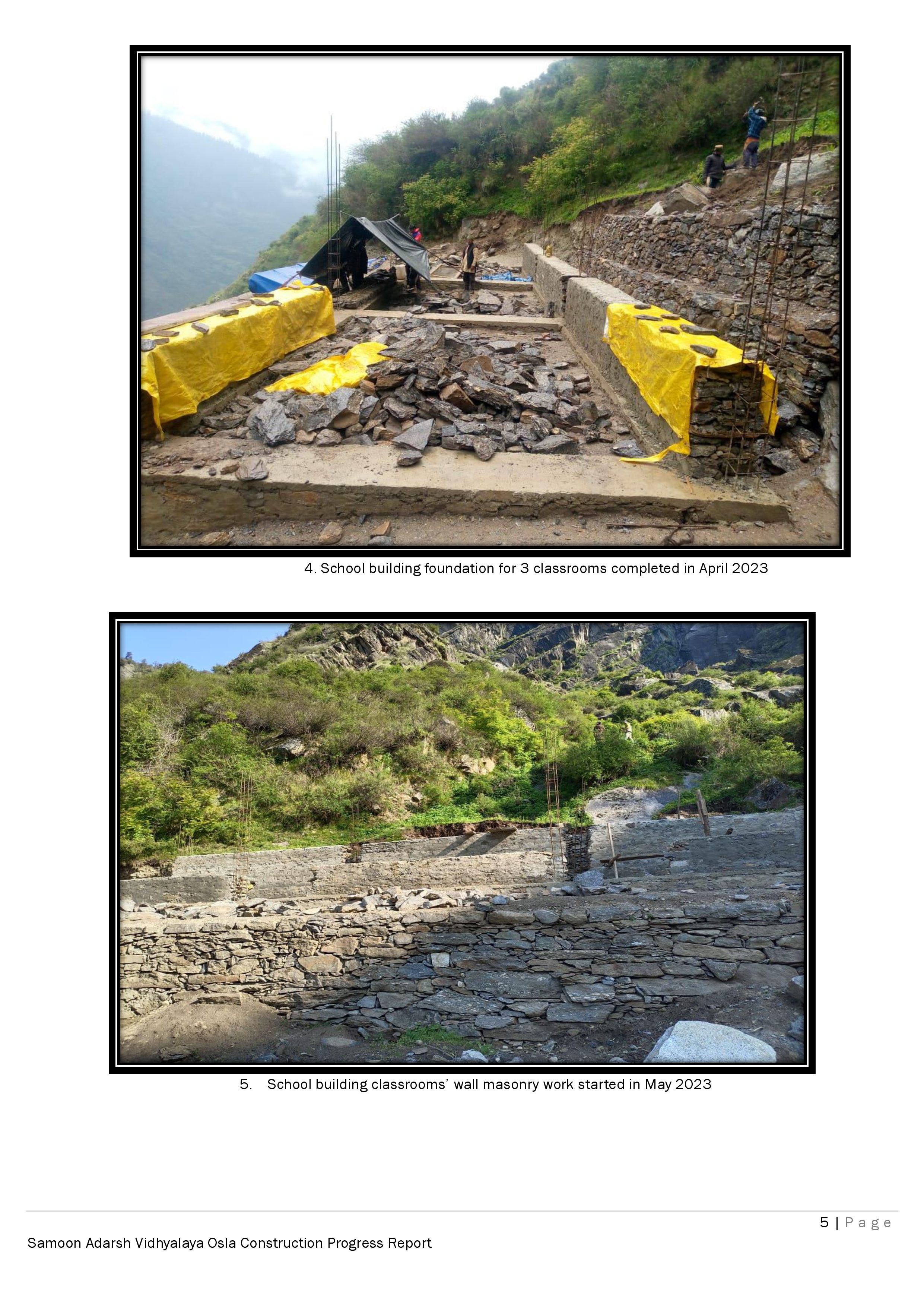
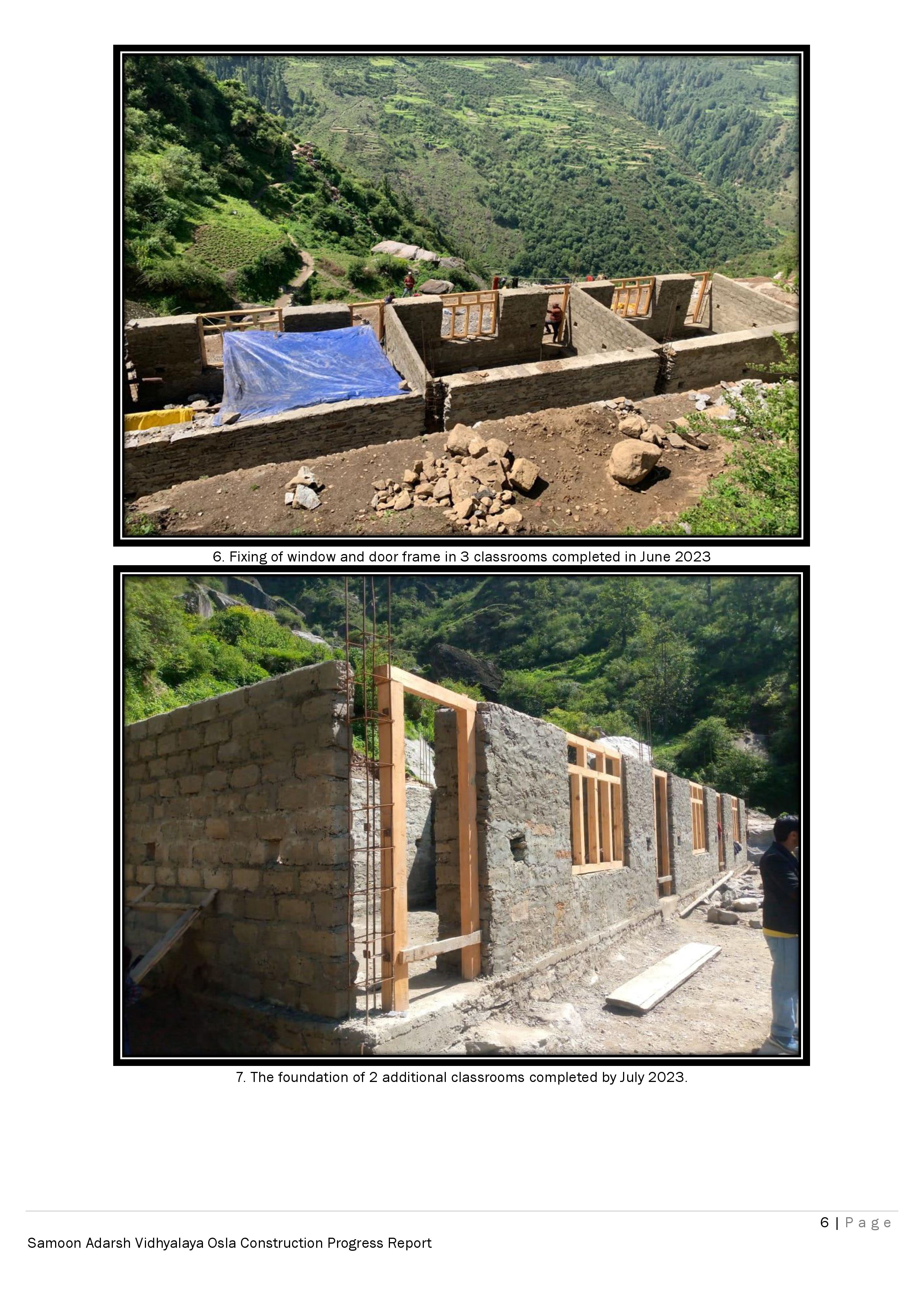
Location: Osla Village at Govind National Park in Uttarakashi District Of Uttarakhand
-
Duration: 3 Years (Ongoing Project)
-
Partners/Funding Needed: 1. Pneumax Pneumatic India Pvt. Ltd.
2. Gametion Technologies Pvt. Ltd.
3. Midas Hygiene Industries Pvt. Ltd.
-
Beneficiaries:
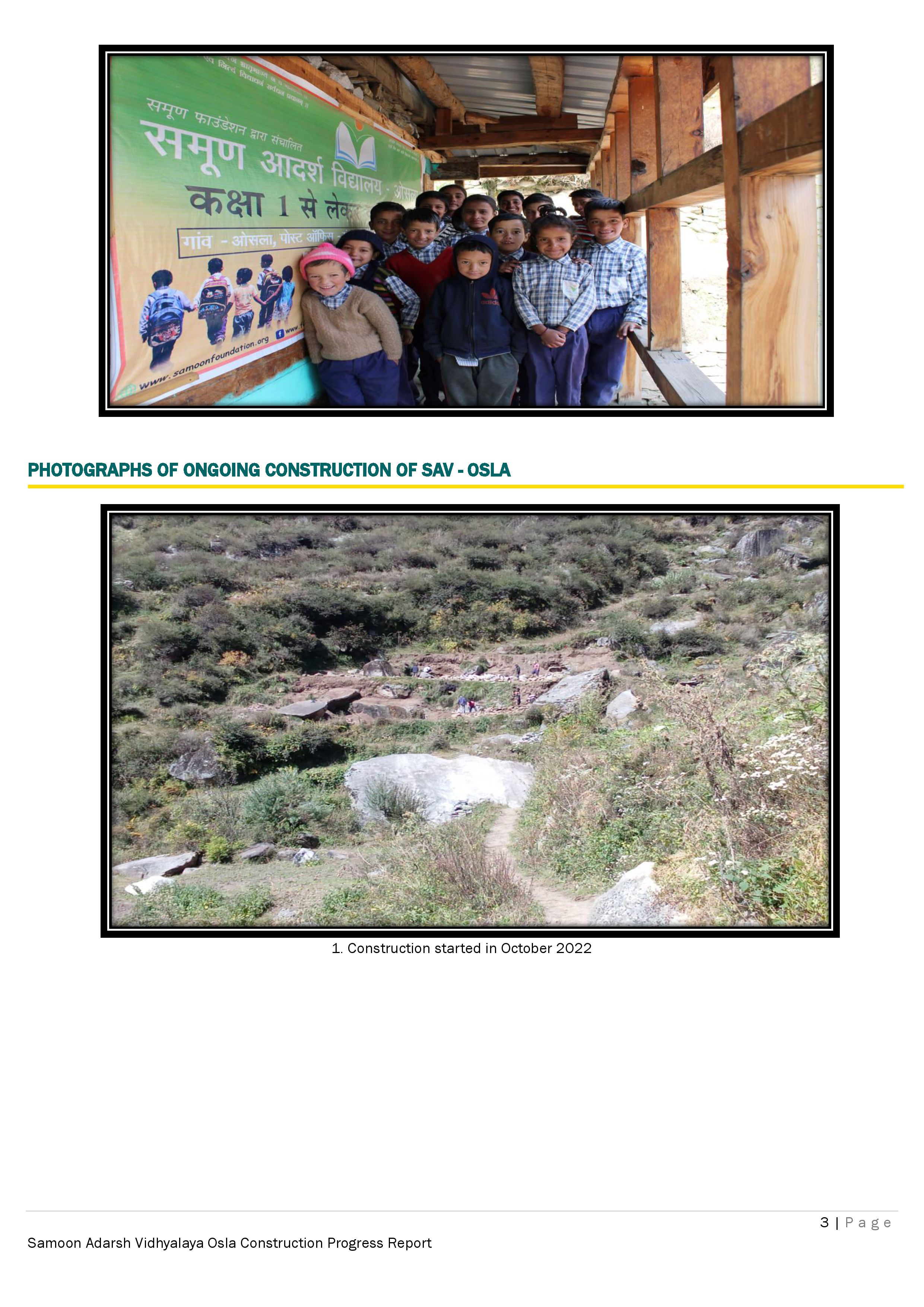
At present, the school has a current strength of 100 students, who are enrolled across different primary grades. As infrastructure and resources expand, the school has the capacity to reach and support nearly 200 beneficiaries annually, ensuring that no child in the region is left without access to education.
-
Risk Assessment:
|
Issue
|
Issue in details
|
Control Measures
|
|
Unavailability of skilled and unskilled labour
|
Mostly
the labourers were not ready to work in such a rural area where basic
necessities were not available.
|
Higher
or double wages were paid to motivate them to work in Osla village.
|
|
Lack of eating facilities
|
Essentials
such as vegetables and fruits were not available in the village, requiring
laborers to carry their own provisions.
|
Ration
was sent to the construction site well in advance.
|
|
Health Hazards on Construction Sites
|
Large
rocks had to be cut into smaller pieces for construction, posing a high risk.
The nearest clinic was 16 kilometers away, making access to first aid
challenging.
|
Basic
first aid boxes were kept on the construction site as a preventive measure.
|
|
Freezing weather & Road gets closed during rains
|
During
heavy snowfall and rainy seasons, trekking paths would get blocked due to
landslides, requiring construction work to be paused.
|
Work
was stopped during Jan–Feb (snowfall) and Jul–Aug (heavy rain), and the team
accelerated progress during the remaining 7–8 months.
|
|
Unavailability of telephone connectivity
|
Labourers
couldn't communicate with their families for weeks due to the absence of a
mobile tower. They had to walk 16 kilometers to reach network areas.
|
Wellbeing
messages to the family members being sent on a weekly basis through the horse
and mule operators
|
-
Need Assessment:
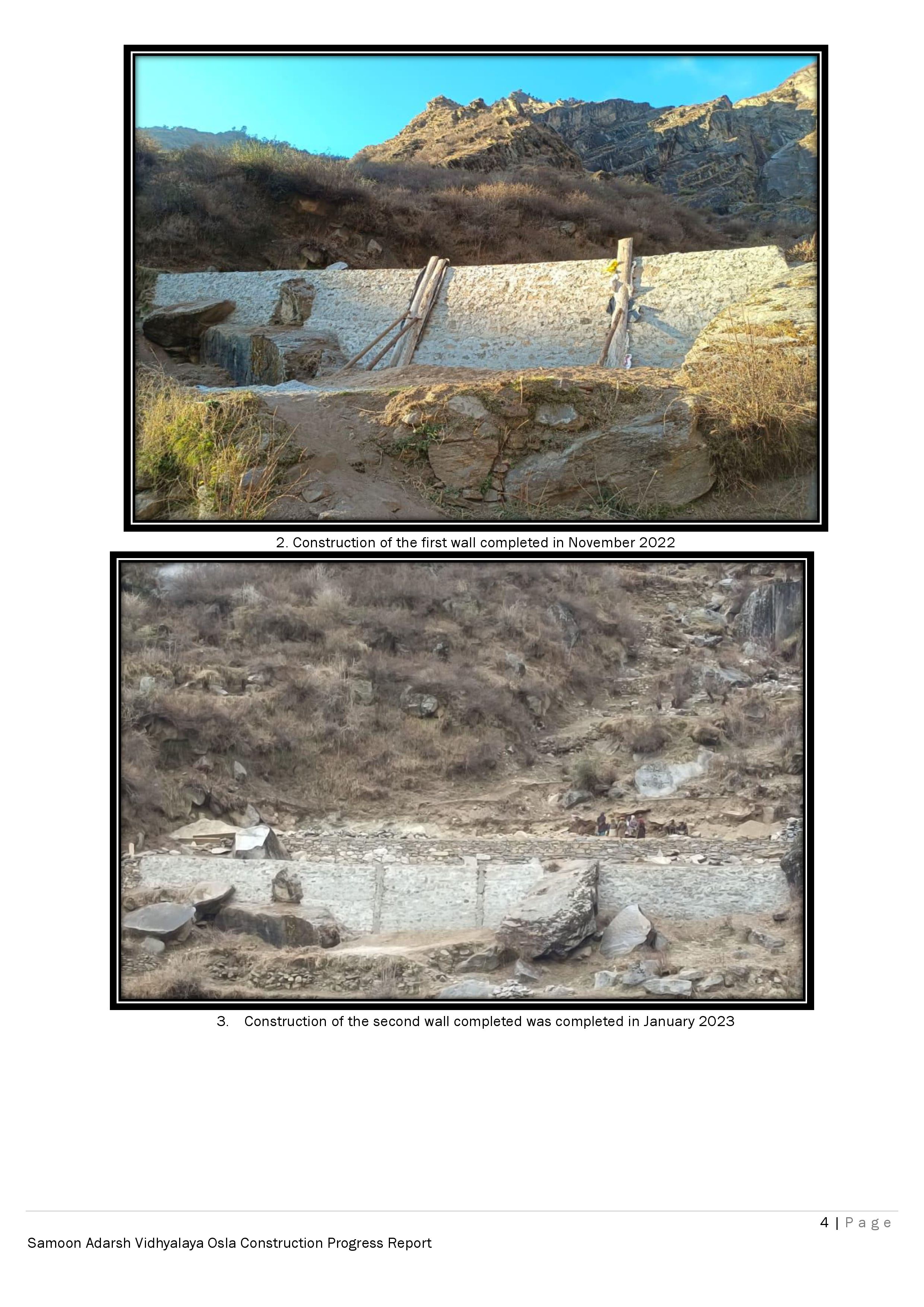
Osla, which is the last village in Uttarkashi district of
Uttarakhand state is inaccessible by road today. The nearest roadhead in
neighbouring Taluka village is a 16-kilometre-long trek away. This lack of
connectivity has led to several infrastructural challenges, including the
provision of education. To address this issue, the Samoon Foundation has
established the Samoon Adarsh Vidhyalaya (hereinafter referred to as SAV) in
Osla. Founded in April 2021, SAV is a Hindi-medium primary school that provides
free-of-charge education to approximately 100 students. Under current
circumstances, SAV is crucial in ensuring that the educational needs of Osla’s
children are not compromised.
-
 Monitoring & Evaluation:
Monthly Reports:
Teachers submit
monthly academic and activity reports to Samoon Foundation management (covering
attendance, progress, extracurriculars, and challenges).
Quarterly Reviews:
Foundation members
conduct quarterly visits (physical or virtual) to review teaching quality,
infrastructure, student performance, and teacher commitment.
Annual Assessments:
Students’ academic
results and holistic development (sports, cultural activities, leadership
skills) are reviewed at the end of each academic year.
Community Feedback:
Parent–teacher
meetings and village community gatherings are held to gather feedback, address
concerns, and align the school with local needs.
Financial Oversight:
Donor funds and member
contributions are tracked through audited accounts. Annual audit reports ensure
transparency and accountability.
Impact Evaluation:
Progress is measured
through indicators such as student enrollment and retention, attendance rates,
academic outcomes, and participation in extracurricular/community events.
-
Sustainability Plan:
Member Contributions
(Current Model):
The core strength of
the school lies in the commitment of Samoon Foundation members, who contribute
monthly from their personal income to ensure smooth operations, teacher
salaries, and essential expenses.
Donor & CSR
Partnerships:
We are actively
reaching out to new donors, CSR partners, and philanthropic organizations to
strengthen financial sustainability. Their support helps us expand facilities,
introduce digital tools, and enhance the quality of education.
Community
Participation:
Parents and villagers
are deeply involved in supporting the school with time, resources, and local
solutions. This ownership ensures that the school remains relevant,
accountable, and sustainable in the long term.
Contingency Plan:
If external funding
sources decline, we plan to introduce a minimal tuition fee structure for
families who can afford it, while continuing free education for underprivileged
children. This hybrid model will secure basic operations without compromising
access.
Future Vision:
Our goal is to build
an endowment fund and gradually transform Samoon Adarsh Vidyalaya into a green,
eco-friendly, digital school, reducing running costs through solar energy,
local resource use, and technology-driven efficiency.
-