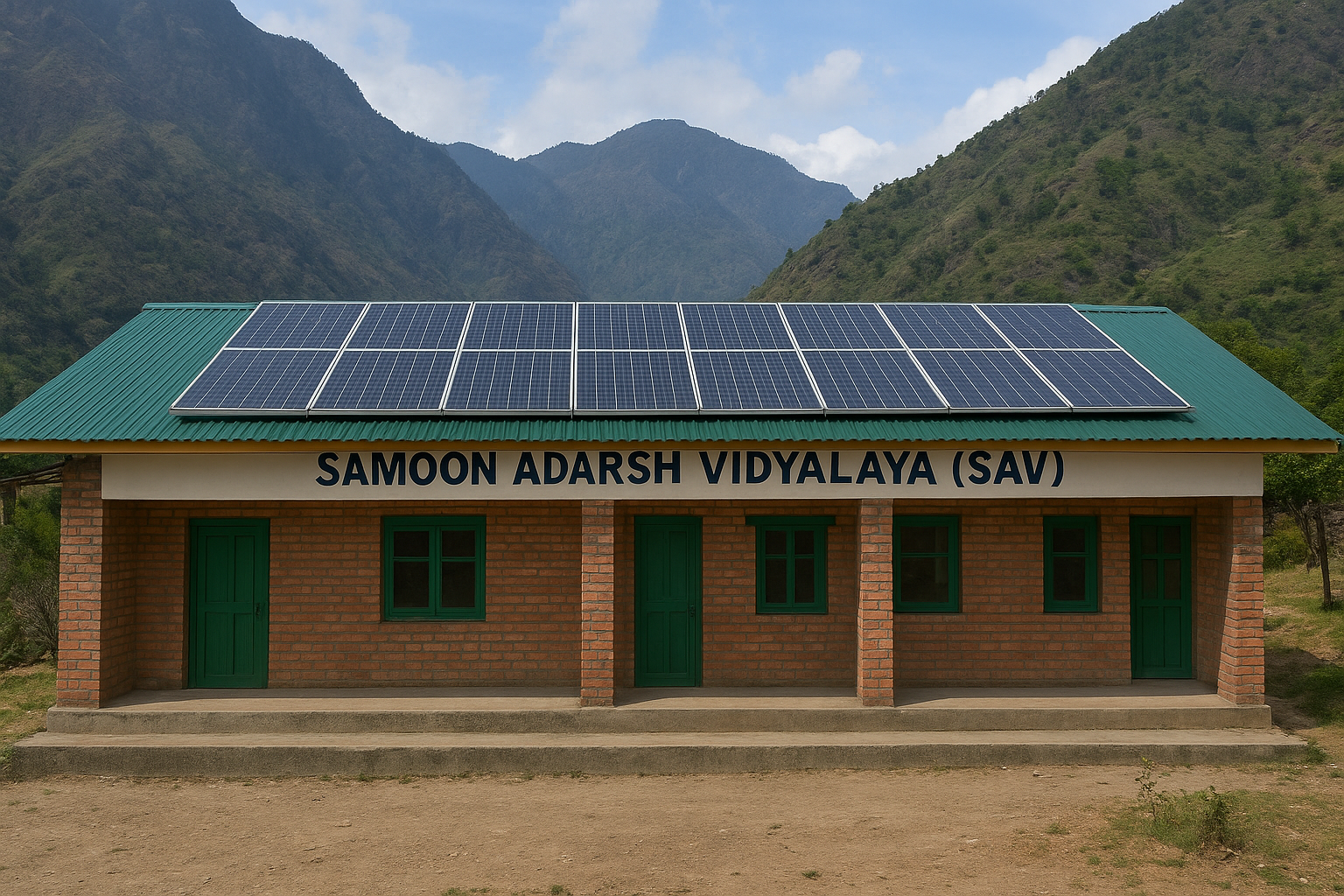
Green Transformation: Installing Solar Power System At Samoon Adarsh Vidyalaya

Proposal
Project Details
Not Available
  •  Proposal
  • Not Available: Osla Village, Uttarakashi, Uttarakhand
  • Local Context & Target Group:

    Osla village, located deep inside the Govind National Park, is an extremely remote Himalayan settlement—reachable only after a 16 km trek. The region lacks reliable electricity, digital access, and basic infrastructure. Most families depend on subsistence farming and labour.

    Samoon Adarsh Vidhyalaya (SAV) is the only school providing 100% free education to children from Osla and neighbouring villages. However, electricity challenges prevent digital learning, limit teaching hours, and affect overall school functioning.

    A solar power system is therefore essential to ensure uninterrupted learning, reduce carbon footprint, and support the school’s vision of becoming a Green and Model Digital School in the Western Himalayas.


  • Executive Summary:

    Samoon Foundation proposes the installation of an 8 kW Solar Power System with 10 kWh battery backup, hybrid inverter, and 1-year AMC at Samoon Adarsh Vidhyalaya (SAV) in Osla.

    The system will power:

    5 Classrooms
    1 Computer Room
    1 Office
    Lighting + Fans + Digital Devices

    The project will enable:

    • Consistent electricity for digital learning
    • Computer education for mountain children
    • Reduction in energy costs
    • Long-term environmental sustainability
    • A model “Green School” for the region

    Total Project Cost: ₹10,00,000 (Including AMC + logistics + batteries + digital device recharge needs)

  • Energy Assessment & System Recommendation:

    Rooms & Loads:

    • 5 Classrooms
    • 1 Computer Room
    • 1 Office
    • LED Lighting, Fans, Computers, Router, Smart Devices

    Daily Load Estimate:

    ≈ 15 kWh/day

    Recommended Solar System:

    Solar PV Capacity: 8 kW
    Hybrid Inverter: 8 kW MPPT
    Battery Bank: 10 kWh usable
    Generation: ~30–32 kWh/day (4 peak sun hours)

    This will power essential loads and allow smooth digital learning.

  • Not Available:
    Not Available
  • Theory of Change :

    Level

    Description

    Indicators

    Assumptions

    Inputs

    Funding (₹10 lakh), solar panels, inverter, batteries, technical experts, AMC, school infrastructure, community support

    Availability of equipment & trained manpower

    Timely fund disbursement; vendor availability

    Activities

    Energy audit, procurement, transport to Osla, installation, commissioning, training of staff, AMC maintenance, awareness sessions

    No. of activities completed as per timeline

    Weather conditions allow site access

    Outputs

    8 kW solar system installed; 10 kWh battery backup functioning; staff trained; monitoring system active

    System installation completion, training records

    Equipment performs as expected

    Outcomes (Short–Term)

    Uninterrupted electricity for classrooms; digital classes begin; reduced power interruptions

    Hours of daily power, number of digital classes

    Staff continues using digital tools

    Outcomes (Medium–Term)

    Reduced operational cost; improved student attendance & learning levels; strong awareness about renewable energy

    Attendance data, student learning results

    Stable school operations

    Impact (Long–Term)

    SAV becomes a “Model Green School” in remote Himalayas; community shifts towards eco-friendly practices; long-term sustainability in education

    Recognition as green campus; adoption of solar in nearby villages

    Community cooperation: system maintained properly

  • Project Log Frame :

    Project Components

    Indicators

    Means of Verification

    Assumptions

    Goal: Promote green, resilient education in remote Himalayan region

    1 Green Solar-Powered School established

    Photos, reports, monitoring data

    Weather and access remain manageable

    Purpose: Provide reliable electricity for learning

    Hours of uninterrupted power supply increased

    Power logs, school reports

    System functions optimally

    Outputs: Installed solar system, trained staff

    8 kW solar installed, staff trained

    Handover certificate, training logs

    Skilled staff available

    Activities: Audit, procurement, installation, training, AMC

    No. of activities completed on time

    Monthly & quarterly reports

    Timely fund disbursement

  • Detailed Scope of Work:

    Energy audit
    System design & load calculation
    Procurement of panels, inverter, batteries
    Transportation to Osla (including porter logistics)
    Installation and commissioning
    Training for teachers & caretaker
    AMC for 1 year
    Monitoring dashboard
    Quarterly evaluation & reports

  • Not Available:
    Not Available
  • Detailed Budget:

    Budget Head

    Description

    Amount (₹)

    Solar Panels (8 kW)

    Modules + Mounting Structure

    2,95,000

    Hybrid Inverter (8 kW)

    MPPT, grid support

    1,50,000

    Battery Backup (10 kWh)

    Lithium/Tubular

    1,95,000

    Wiring, Switchgear

    ACDB/DCDB, cabling, protection

    70,000

    Installation & Labour

    Certified installation

    60,000

    Transportation (16 km trek)

    Porter + mule + vehicle

    70,000

    Monitoring System

    Digital display + sensors

    15,000

    Digital Device Support

    Computer batteries/UPS/chargers

    50,000

    AMC – 1 Year

    Scheduled visits + basic repairs

    40,000

    Contingency

    Site adjustments & safety tools

    55,000

    Total

    ₹10,00,000

  • Implementation Timeline:

    Months 1: Energy audit, design, vendor finalization
    Month 2: Procurement & transport
    Months 3: Installation & commissioning
    Month 4: Staff training & handover
    Months 5–12: AMC, monitoring, quarterly reporting

Monitoring & Evaluation:
  1. Monthly energy generation reports
  2. Quarterly progress reports to CSR partner
  3. AMC service logs
  4. Student learning growth analysis once digital classes begin
Sustainability Plan:
  1. Zero electricity bills reduce long-term burden
  2. Community ownership ensures maintenance
  3. Solar included in school’s environmental studies
  4. AMC ensures first-year stability
  5. After AMC: Foundation will maintain through donor/community pool
Risk Assessment & Mitigation:

Risk

Impact

Mitigation

Transport challenges

Delay

Advance planning + local porters

Harsh weather

Installation delays

Seasonal scheduling

Battery degradation

Reduced backup

Warranty + AMC

Technical faults

Power loss

Remote monitoring + trained caretaker

Conclusion:

The Solar Power Project at Samoon Adarsh Vidyalaya is a transformative sustainability initiative that will ensure uninterrupted learning for mountain children, enable digital education, and position SAV as a model Green School in the Western Himalayas.

Subscribe
Our Newsletter

WhatsApp