- Proposal
-
Target Area: Rishikesh, Dehradun, Uttarakhand
-
Goal/Objective:
Women
play a variety of significant roles in our society from their birth till the
end of life. Women empowerment is the most important issue in the world. The
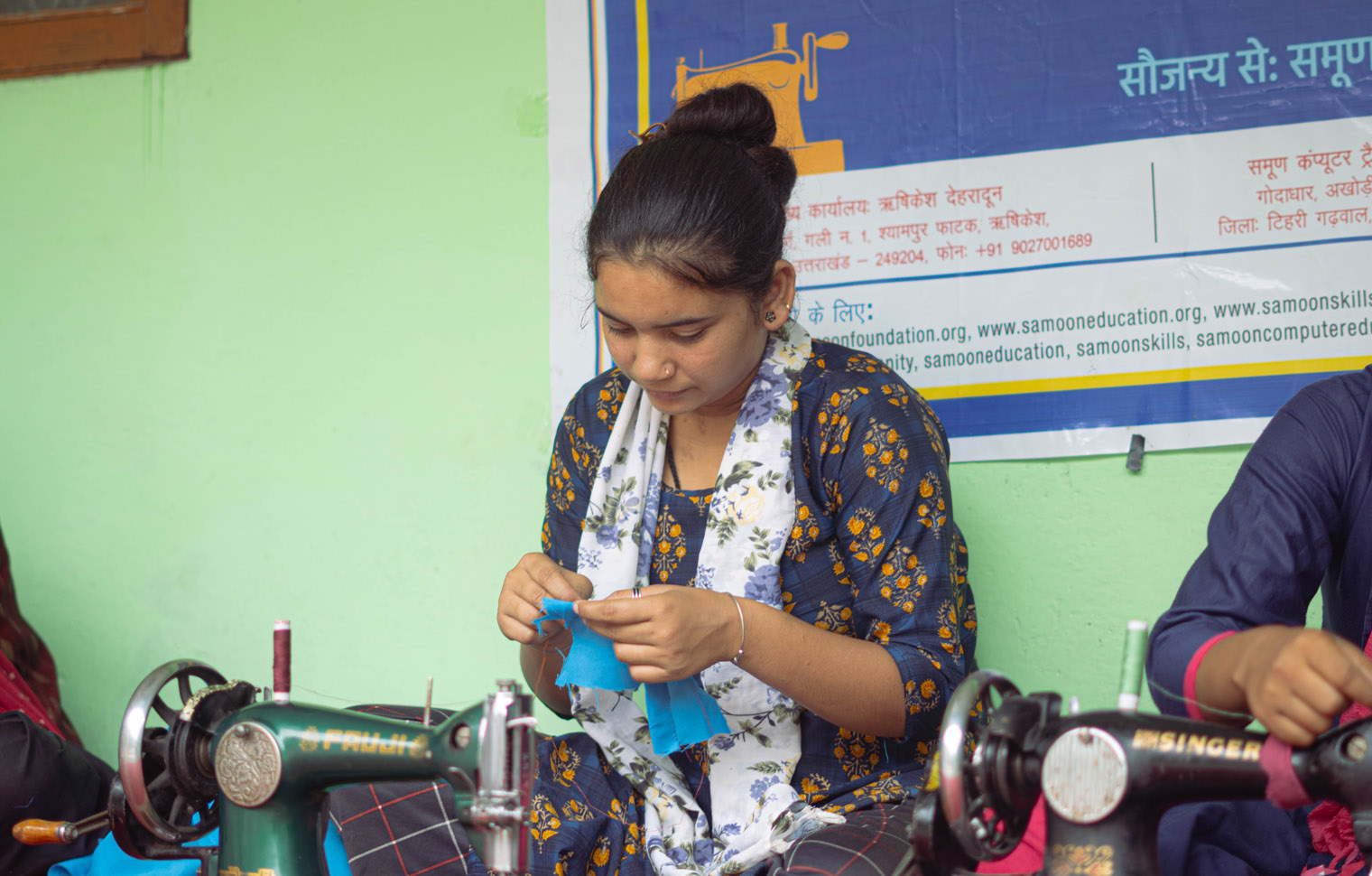
focus of the project is to empower women and equip them with tools to become
self-reliant through stitching and tailoring skill upgradation programs.
-
Background/Need Assessment:
Shyampur, located on the outskirts of Rishikesh in Uttarakhand, is home to a large population of families from poor socio-economic backgrounds. Many women and girls in the region are deprived of access to skill development opportunities, formal employment, and financial independence. Due to economic hardship, most of them are unable to pursue higher education or professional training, leaving them dependent on low-paying, irregular work or confined to unpaid domestic responsibilities.
At the same time, there is a significant demand in the local community for affordable garments and school uniforms, which creates an opportunity to link women’s training with sustainable income generation. By equipping women with professional tailoring and garment production skills, the project will not only enhance their confidence and self-reliance but also enable them to contribute to their household income and uplift their families.
The proposed Skill Development & Garment Production Centre in Shyampur directly addresses these challenges by:
-
- Providing structured training in stitching and tailoring to underprivileged women.
-
- Creating a pathway to employment through an in-house production unit.
-
- Supplying affordable, good-quality garments and school uniforms to the community.
-
- Establishing a replicable model of women-led microenterprise and social entrepreneurship.
This intervention is crucial to bridge the gap between lack of opportunities and sustainable livelihoods, empowering women in Shyampur to move from economic vulnerability towards self-dependence and dignity.
-
Proposed Activities:
- Provide skill training in tailoring and
garment production to 30–40 underprivileged women annually.
- Create sustainable employment through an
in-house production unit.
- Deliver affordable garments and school
uniforms to the local community.
- Empower women socially and economically,
fostering confidence and financial independence.
-
Timeline:
1 Year
-
Estimated Budget:
Machinery &
Infrastructure Requirements
|
Equipment
|
Qty
|
Unit Cost (INR)
|
Total (INR)
|
|
Industrial Sewing Machines
|
10
|
₹18,000
|
₹1,80,000
|
|
Interlocking (Overlock) Machines
|
5
|
₹22,000
|
₹1,10,000
|
|
Button hole Machine
|
1
|
₹40,000
|
₹40,000
|
|
Button Stitching Machine
|
1
|
₹35,000
|
₹35,000
|
|
Fabric Cutting Machine
|
1
|
₹25,000
|
₹25,000
|
|
Steam Iron with Table
|
2
|
₹15,000
|
₹30,000
|
|
Measuring Tables & Chairs
|
3
|
₹5,000
|
₹15,000
|
|
Sewing Accessories (Initial Stock)
|
-
|
-
|
₹25,000
|
|
Electrical Setup (Wiring, Sockets etc.)
|
-
|
-
|
₹20,000
|
|
Branding & Packaging Setup
|
-
|
-
|
₹20,000
|
|
Total Machinery & Setup Cost
|
|
|
₹5,00,000
|
Human Resource & Operational Costs (Year 1)
|
Position/Expense
|
Monthly Cost (INR)
|
Annual Cost (INR)
|
|
Sewing Trainer
|
₹15,000
|
₹1,80,000
|
|
Training Centre Rent
|
₹10,000
|
₹1,20,000
|
|
Centre Coordinator/Admin
|
₹10,000
|
₹1,20,000
|
|
Utilities & Maintenance
|
₹6,667
|
₹80,000
|
|
Miscellaneous (Stationery, etc.)
|
₹8,333
|
₹1,00,000
|
|
Total Operational Cost
|
₹50,000
|
₹5,00,000
|
Total Project
Cost
|
Component
|
Amount (INR)
|
|
Machinery & Setup
|
₹5,00,000
|
|
Operations (1 Yr)
|
₹5,00,000
|
|
Grand Total
|
₹10,00,000
|
-
Project Log Frame:
|
Objective
|
Indicators
|
Means of Verification
|
Assumptions
|
|
Goal: Improve livelihood opportunities for poor women in Shyampur
|
- No. of women employed
- Increase in monthly income
|
- Monthly reports
- Surveys & income records
|
Support from local community and stakeholders
|
|
Outcome 1: Women trained in garment production
|
- 30–40 women trained per year
|
- Attendance and evaluation reports
|
Women are willing and able to attend training
|
|
Outcome 2: Production unit established
|
- Machines installed
- Products manufactured
|
- Installation photos
- Inventory records
|
Timely procurement of machines and setup
|
|
Outcome 3: Employment for trained women
|
- 20+ women working in production unit
|
- Salary disbursement records
- Production records
|
Continued product demand and sales
|
|
Output 1: Setup of training centre
|
- Functional space with machines and trainers
|
- Inauguration report
- Trainer contracts
|
Infrastructure is secured
|
|
Output 2: Product sales initiated
|
- No. of products sold monthly
- Revenue generated
|
- Sales records
- Feedback from customers
|
Products meet market expectations
|
|
Activities: Conduct training, run production, sell products
|
- Training calendar
- Sales strategy
|
- Training and production schedules
|
Trainers and coordinator perform effectively
|
-
Theory of Change:
Problem:
Women from low-income families in Shyampur, Rishikesh lack access to skill
development, employment, and financial independence.
Inputs:
- Sewing machines, training space, qualified
trainers, operational funds
- Curriculum, production tools, branding and
sales mechanisms
Activities:
- Sewing and tailoring training for women
- Establishment of a small-scale production
unit
- Manufacturing and selling
garments/uniforms
- Linking products to local markets and
schools
Outputs:
- 30–40 women trained per year
- Garments and uniforms produced and sold
- 20+ women employed in the production unit
Outcomes:
- Women gain confidence, skills, and regular
income
- Families experience improved financial
stability
- Community receives affordable clothing
solutions
Impact:
Economic Impact: Enhanced household income and financial stability for poor families in Shyampur.
Social Impact: Empowerment of women as skilled earners and decision-makers in their households.
Community Impact: Availability of affordable garments and uniforms; stronger community self-reliance.
Sustainability Impact: Establishment of a self-sustaining social enterprise with profit-sharing, reducing long-term donor dependency.
Replicability: A scalable model that can be implemented in other rural and semi-urban regions of Uttarakhand.
-
Partners/Funding Needed:
Samoon Foundation
seeks CSR partnership and financial support of ₹10,00,000 under your
organization’s CSR initiative to establish a Skill Development & Garment
Production Centre in Shyampur, Rishikesh.
This project aligns
with key focus areas of CSR under Schedule VII of the Companies Act, 2013,
specifically:
Employment enhancing vocational skills
Women empowerment
Promotion of livelihood enhancement
projects
Rural development projects
Your CSR contribution
will:
- Empower underprivileged women with
life-changing skills
- Create sustainable livelihoods
- Promote social entrepreneurship and
community development
- Help produce affordable school uniforms
and garments for rural families
We invite your
esteemed organization to join hands with us in building a more inclusive,
skilled, and self-reliant society.
-
Monitoring & Evaluation:
Regular Monitoring: Monthly visits and oversight by Samoon Foundation’s Executive Committee.
-
Progress Reports: Quarterly reports shared with donors, including pictorial documentation of activities and beneficiaries.
-
Outcome Tracking: Attendance records, skill assessment tests, and employment data maintained for all trainees.
-
Impact Measurement: Surveys on income increase, women’s confidence levels, and community feedback on garment affordability.
-
Transparency: Financial and operational audits conducted periodically, with results shared with stakeholders.
-
Sustainability Plan:
- Revenue from uniform/garment sales
sustains salaries and operations
- Women involved in profit-sharing model
- Potential tie-ups with NGOs, local
schools, and small retailers
- Brand visibility through fairs, digital
platforms, and community outlets