- Proposal
-
Target Area: Osla Village, Govind National Park Region, Uttarkashi District, Uttarakhand
-
Goal / Objective:
Goal:
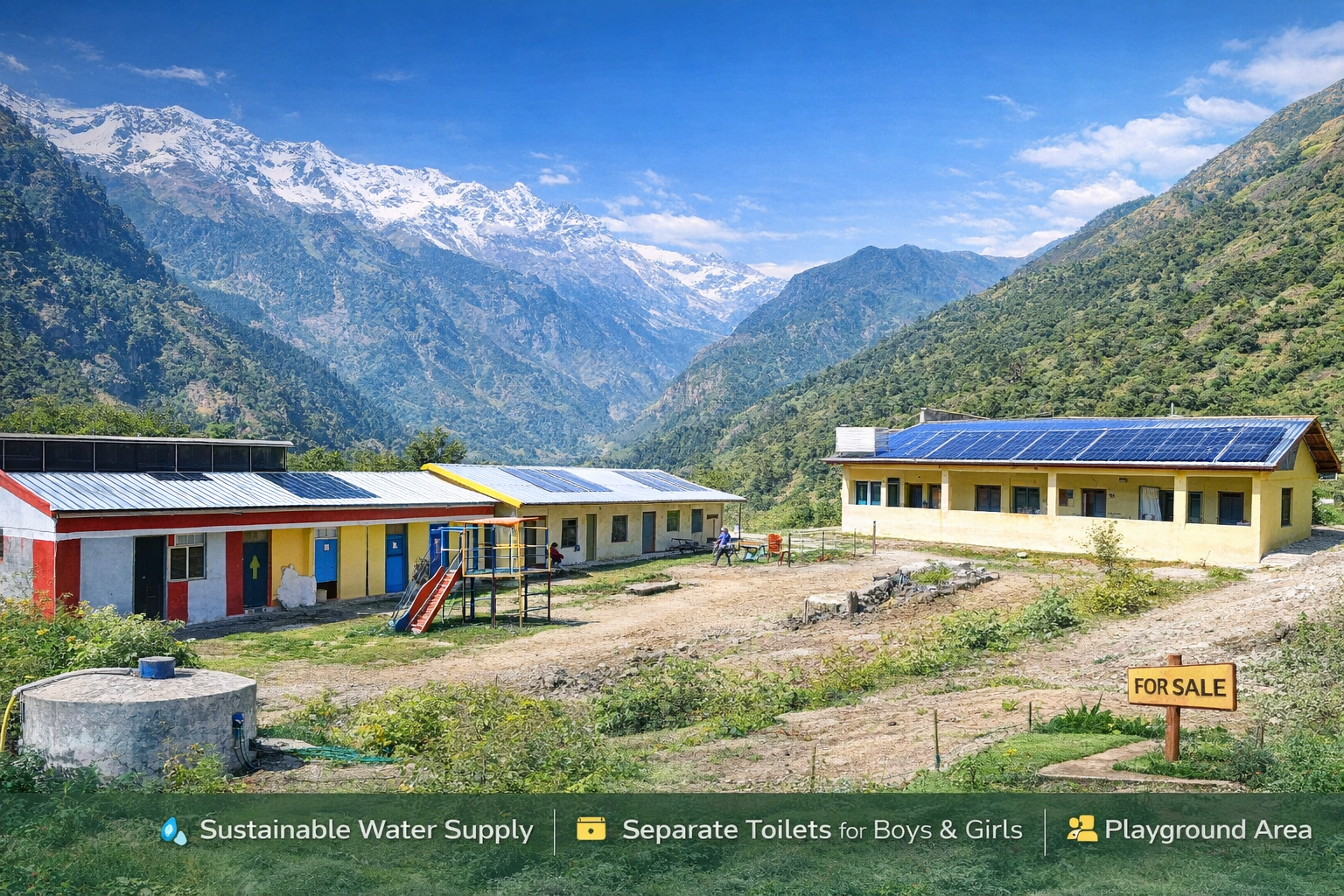
To transform Samoon Adarsh Vidyalaya (SAV), Osla into a safe, inclusive, green, and future-ready rural model school through infrastructure strengthening and sustainable development.
Objectives:
-
To provide safe and gender-segregated sanitation facilities for students and staff.
-
To strengthen academic quality through digital learning, library access, and teacher support spaces.
-
To ensure year-round water availability through sustainable water infrastructure.
-
To promote holistic child development through sports and play activities.
-
To transform SAV into a Green & Eco-Friendly Model School powered by solar energy.
-
To secure land for long-term infrastructure and future expansion.
-
Samoon Adarsh Vidyalaya (SAV) is located in Osla village, a last-mile Himalayan settlement inside Govind National Park, Uttarkashi district, at an altitude of approximately 2590 meters. The village is accessible only via a 14–16 km trek and remains cut off for nearly 4–5 months annually due to monsoon rains and heavy snowfall. Although road construction is underway and partially completed, accessibility challenges persist.
The school currently operates with 5 classrooms (Grades 1–5) providing 100% free education to around 100 students from remote rural families. While the main school building has been successfully constructed, significant infrastructure gaps remain. These gaps directly affect hygiene, safety, learning outcomes, and the long-term sustainability of the institution.
Key needs identified include:
• Adequate sanitation facilities for boys, girls, and staff
• Dedicated learning spaces such as a computer lab, library, and staff room
• Reliable water supply and storage infrastructure
• Playground for physical and mental development
• Solar power system to ensure clean and uninterrupted energy
• Additional land to support expansion and infrastructure development
Without these improvements, the quality of education and overall child development remain constrained.
-
Proposed Activities:
-
Construction of 3 Male & 3 Female Toilets
-
Construction of 1 Computer Lab, 1 Library & 1 Staff Room
-
Installation of Water Supply System from nearest natural water source (Jharna) with underground pipeline and cemented water storage tank
-
Development of Playground for Sports & Physical Activities
-
Solar Power System Installation for entire school campus
-
Land Purchase for sanitation block, rooms, and playground expansion
-
Estimated Timeline:
Project Duration: 4 Months
• Month 1 – Planning, procurement of materials, and land finalization
• Month 2 – Construction of toilets and rooms
• Month 3 – Installation of water supply system and playground development
• Month 4 – Solar power installation, finishing works, and final inspections
-
Estimated Budget:
Project Budget Summary
| SL. No. |
Component |
Amount (INR) |
| 1 |
Land Purchase |
|
| 2 |
Toilets (3 Male + 3 Female) |
|
| 3 |
Computer Lab, Library & Staff Room |
|
| 4 |
Water Supply System & Storage Tank |
|
| 5 |
Playground Development |
|
| 6 |
Solar Power System Installation |
|
| 7 |
Transport, Administration & Monitoring |
|
|
Total Project Cost |
|
-
Expected Impact:
• 100% access to safe sanitation facilities
• Improved hygiene and reduced health risks among students
• Enhanced digital exposure and improved academic outcomes
• Year-round access to clean water
• Zero electricity dependency through solar power
• Higher student retention and improved learning environment
• Transformation into a model green rural school
-
Theory of Change:
Inputs:
Funding, land, construction materials, labour, solar equipment
Activities:
Construct toilets, learning spaces, water system, playground; install solar power system
Outputs:
6 toilets, computer lab, library, staff room, water tank, solar system, playground
Short-Term Outcomes:
Improved hygiene, better learning environment, digital exposure
Long-Term Impact:
Higher retention, improved learning outcomes, healthier students, and establishment of a model rural school
-
Partners / Funding Needed:
• CSR partners and corporate donors
• Philanthropic foundations and trusts
• Education-focused funding agencies
• Individual donors and NRI supporters
• Institutional partnerships for renewable energy and WASH initiatives
-
Monitoring & Evaluation:
• Monthly progress reports with photographs and videos
• On-site supervision by local coordination team
• Quarterly internal review meetings
• Annual financial audit and donor impact reporting
• Infrastructure milestone tracking and quality inspections
-
Sustainability Plan:
• Monthly contributions from NRI and India-based Samoon members
• Community participation in maintenance and asset protection
• Solar power system to minimize recurring electricity costs
• Gradual CSR and institutional fundraising strategy
• Long-term sustainability plan including minimal fee introduction for higher classes (if required)